Why a 30-second video needs a script
On Reels, TikTok and Shorts, people decide in the first second or two whether to keep watching. A video that starts with "Hi everyone, today I want to talk about…" has already lost most of them. A script, even a short one, makes you put the interesting part first, keep only one idea and end on purpose instead of trailing off.
It also saves time when filming: you know what to say, you need fewer takes, and the captions are easier to check later.
The structure: hook, one idea, ending
- The hook (first 2 seconds): a sentence that makes someone stop scrolling. A surprising fact, a mistake people make, a promise of a result, a question they recognise.
- The idea (the middle): one point, explained in two to four short steps or reasons. If you have three tips, they are three videos.
- The ending (last 3 seconds): a conclusion that gives the viewer something to do or think: try this, save it for later, which one do you use? Avoid a long goodbye.
How many words fit
People speak at about 130 to 160 words per minute in a relaxed, clear voice, and a little faster in short videos. Use this to size your script before you record:
| Length | Words | What fits |
|---|---|---|
| 15 seconds | 35–45 | A hook and one tip, or one surprising fact |
| 30 seconds | 70–85 | A hook, two or three steps and a short ending |
| 60 seconds | 140–170 | A hook, a short story or four steps, and an ending |
| 90 seconds | 210–250 | A full tutorial with an example |
If your script is longer than this, cut adjectives and introductions first. Short sentences are easier to say, easier to read as captions and easier to follow without sound.
Hooks that work, and why
- A mistake: "You've been charging your phone wrong." People want to know if it's them.
- A result first: "This is how I cut my editing time in half." Show the end, then the steps.
- A number: "3 settings to change on a new phone." It tells the viewer how long they'll wait.
- A question they ask themselves: "Why do your videos look blurry on Instagram?"
- A contrast: "Expensive microphone vs. a $10 one." Two things side by side create curiosity.
Avoid hooks that promise something the video doesn't deliver. People leave, and the apps notice when viewers stop watching early.
An example, from idea to script
Idea: a tip for saving battery. A first draft might start with an introduction and list five tips. Here is the same idea as a 30-second script with one point:
- Hook: "Your phone's battery isn't dying because it's old. It's this setting."
- Idea: "Open Settings, go to Display and turn on dark mode. On phones with OLED screens, black pixels are switched off, so a dark screen uses noticeably less power. Then lower the screen timeout to 30 seconds."
- Ending: "Try it for a day and compare. Save this so you remember where the setting is."
That's about 70 words: 30 seconds at a natural pace, with room for a pause after the hook.
Write for people watching without sound
Many people watch short videos on mute, on a bus or in bed. Captions make your video work without sound, and a script makes captions easy: the words are already written. Keep each sentence short enough to read in a second or two, and put the key word of each sentence on screen. The automatic caption generator writes captions from your voice, word by word, and lets you correct each line before they're drawn on the video.
From script to video
Read the script aloud once before recording: anything hard to say is hard to listen to. Record a few seconds of silence before and after, then cut the pauses with the silence remover so the video keeps its rhythm.
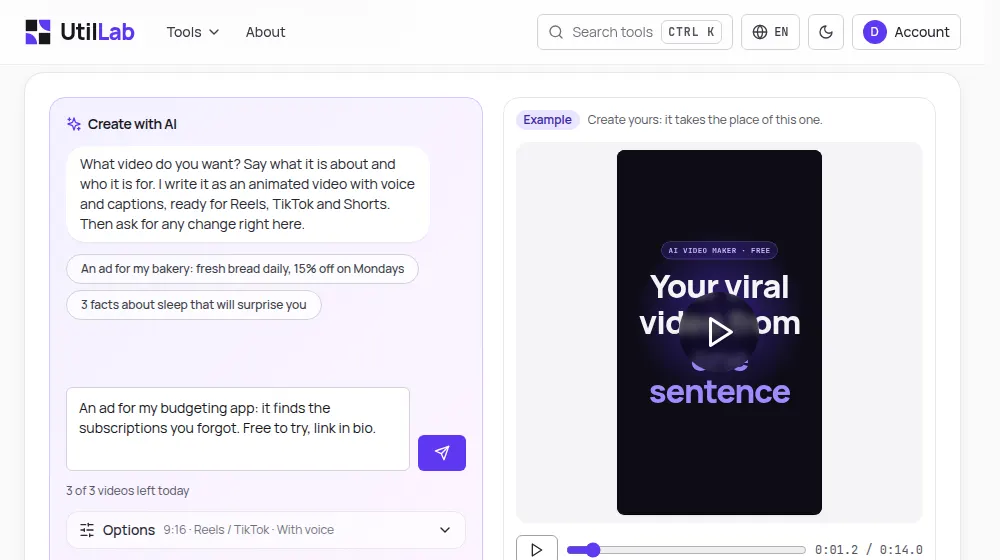
If you'd rather not appear on camera at all, the AI video maker turns an idea or a script into a vertical video with a narrated voice, animated scenes, captions and music. You can describe the topic in a sentence and edit the script it writes before the video is made.